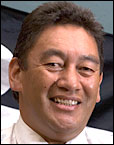
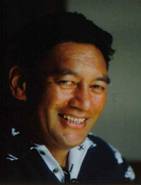
Maori Party MP, Hone Harawira is often in the news, usually over something to do with race or racial agitation.
We all know that Hone is brown-he constantly reminds us that he is a champion of Maoridom.
But is Hone Harawira really a "beefsteak radical"-brown on the outside, red in the middle?
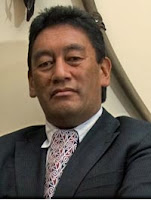
The son of well known radical, Titewhai Tarawira, young Hone was exposed to the radical left from his teens.
While a sixth former at St Stephens in Auckland in the early '70s, Hone's mum used to take him to meetings of the Maori/Marxist organisation, Nga Tamatoa (Young Warriors).
In 1979, young Hone travelled to the Philippines where he "met revolutionary struggle". This was possibly referring to one of the many "exposure tours" happening at the time, where NZ radicals went into the Philippines countryside to meet the communist New People's Army.[Broadsheet, July '82]
In 1981 Harawira was one of 5 Waitangi Action Committee members jailed, in Whangarei over Waitangi Day protests- the group called themselves Nga Kuri Otu (dogs of war).
In April 1981 Harawira wrote article in HART's "Amandla" on Maori and Polynesian Groups against the Springbok Tour-he signed on behalf of the Maori Peoples Liberation Movement of Aoteoroa.
In June 1982 Harawira wrote an an article for the Trotsyist paper, Socialist Action (then edited by Keith Locke) entitled "Unemployed for the Army ?"
In November 1982, Harawira spoke on "Maori Peoples Struggle in the Pacific" at a hui organised by the Pacific Peoples Anti Nuclear Action Committee. One of the hui's aims was;
"to recognize Pacific people have a common struggle, we have a common threat of white death".
In February 1987 Harawira represented the Pacific Concerns Resource Centre at a Physicians for Social Responsibility International Conference in Moscow. He spoke about the indigenous Pacific view of the nuclear threat;
"In terms of resource monopoly, economic slavery and potential for death, European civilisation is more barbaric, savage and destructive than any other since the beginning of time. . . and at this time I wish to recognise the Soviet people for hosting this conference . . . Our fight for a better world will only be won . . . when the white man comes home."
In January 1990, Harawira was spokesman for protest group Kia Whaka-taara. He stated his goal was a Maori Parliament with control over New Zealand.
The Maori population was about 1 million when the Europeans came. We had a stable society with our own social controls, our own conservation methods, our own rules of behaviour towards one another.
When Pakehas (white people) came, they brought crime and diseases which almost wiped us out. The population dropped to 40,000 between 1800 and 1900. More died from disease than the big wars we had with the Pakehas. The population is now around 500,000-600,000.
Organised by Australia's biggest Marxist-Leninist organisation the Democratic Socialist Party, the conference attracted radicals and communists from all over the world, including the;
Japanese Communist Party; the Korean Confederation of Trade Unions; the Sanlakas national democratic federation, the Union for Socialist Ideas and Action (BISIG), the Women's Health organisation, the socialist youth Kamalayan, the Akbayan peoples party, Initiatives for International Dialogue, all from the Philippines; the Thai Assembly for the Poor; the Malaysian People's Party; the Singapore Workers Party; the Singapore Democratic Party; the Indonesian People's Democratic Party (PRD); the Free Aceh Movement; Fretilin; the All Burma Students Democratic Federation; the All Burma Students Democratic Organisation; Karen and Mon representatives; the Cambodian Documentation Centre; the Cambodian Women's Development Agency; the Pakistani Labour Party; the Sri Lankan New Socialist Party; the Communist Party of India-ML (Liberation); Melanesian Solidarity from Papua New Guinea; the Bougainville Interim Government; the New Zealand Alliance and NewLabour Party; Maori representatives from the New Zealand NGO Corso; the Polynesian Liberation Front from Tahiti; and the Free West Papua Movement.
Also represented were Marxist-Leninist parties from Nepal, France, Germany, Spain, Russia and the USA
After being elected to Parliament on the Maori Party list in 2005, Hone Harawira has shown little sign of tempering his socialist sympathies. He issued this statement in August 2006;
The Maori Party noted the temporary handover of power in Cuba following Fidel Castro's emergency hospitalisation, and expressed concern for the security of the Cuban government during this period of uncertainty.
"Castro has earned a formidable reputation as the world's longest-ruling head of government, ever since the Cuban revolution of 1959," said Hone Harawira, Maori Party Disarmament spokesperson, "and he won and holds his power in the face of continued efforts to unseat him, by the United States of America."
"I have a real fear that the US will try to destabilise Cuba during this time, in the same way they have undermined many other left-wing governments in Central and South America over the years," said Harawira.
"The move to leftist and indigenous governments in Latin America, with the election of people such as Evo Morales in Bolivia, Victor Chavez in Venezuela, and the close run of Lopez Orbrador in Mexico, will not have escaped the attention of the United States," said Mr Harawira.
"This period of uncertainty in Cuba could well be seen by them as an opportunity to claw back lost ground”.
"Furthermore, armed invasions by the USA to impose 'freedom and democracy', in Grenada and in Nicaragua in the 1980s, and the Middle East over the last few years, suggests that such a possibility exists in Cuba right now," said Mr Harawira.
"History tells us how the United States works," said Mr Harawira, "and the Maori Party urges the New Zealand government to send a strong message to the United States of America, that we would not support any illegal invasion of Cuba."
Turn(s) 22.2 to 23.1 Tuesday, 6 November 2007 4:25 PM
TERRORISM SUPPRESSION AMENDMENT BILL In Committee
HONE HARAWIRA (Māori Party—Te Tai Tokerau): ....when people start talking about the historical nature of terrorism and ask whether the Māori Party actually understands the historical nature of terrorism, I say that absolutely we do. An earlier speaker talked about introduced diseases. I think of influenza, which was introduced by the whalers and sailors, wheelers and dealers, and thieves—who came from England. That disease wiped out thousands of Māori people. When I hear members talk about the murder of innocent citizens, I think of the so-called New Zealand colonial forces who murdered thousands of innocent Māori.
When I think of the terror of the overtaking of a people’s land, I think of the land theft that has gone on since the time the New Zealand Government was first established in this country, and that continues to this very day. I absolutely understand the historical nature of terrorism. I understand it more so than, I assume, many other members of the House.
But do I understand terrorism in the way that other members have expressed it, in terms of this bill? The *answer is no. I do not mind saying that I do not understand terrorism, as it is understood by those fuelled by the jingoistic, acid-drenched, hate-filled, anti-Islamic, death to anyone from the Middle East, vitriolic, poisonous claptrap that the United States is trying to foist upon the rest of the world.
Dr Wayne Mapp: *al-Qaeda.
HONE HARAWIRA: The member says “al-Qaeda”. I have heard the mention of al-Qaeda in this discussion on terrorism. Is that the same al-Qaeda, and Taliban, that were funded by the United States to get the Russians out of Afghanistan?
The CHAIRPERSON (Ann Hartley): The member needs to come back to the bill.
HONE HARAWIRA:....Exactly where does this terrorism come from? It seems to me that terrorism, in terms of this bill, is terrorism as it applies to the American definition, not as it applies to the terrorism that is being meted out against people who oppose that kind of American imperialism. I come back to the meaning of terrorism in this country. My understanding of terrorism comes from a source that is far different from the American expression of terrorism.
My source relies on historical fact, rather than hysterical drama, for its position. My source connects me to my indigenous brothers and sisters all over the world. When I think about terrorism in this country, I again think about the terror of the State. What about the terror imposed on those communities in my whanaunga’s electorate? What about the terror imposed on those communities throughout Rūātoki? What about the terror imposed on activists right throughout the country—Pākehā, Māori, and all sorts of people, like Jimmy O’Dea, a 72-year-old staunch activist. His house was broken into by these—
The CHAIRPERSON (Ann Hartley): The member will come back to the bill, thank you.
HONE HARAWIRA: I think about terrorism in this country and whether I will sit quietly by, as suggested by Wayne Mapp, Mr John Hayes, and others, and wait for the police to come up with a decision. I think not. I will not sit quietly by, while State forces terrorise my people.
If this requires of me that I speak out against the rule of law that would impose terror on Māori communities in this country, then I will speak out. I will speak out against it in this Chamber, on television, in newspapers, and anywhere else I possibly can. I will challenge the rule of law and I will oppose the rule of law, if terrorism is a vehicle being used by the State forces of this country to terrorise Māori communities. I will support those whānau, hapū, iwi, and individuals—Pākehā, Māori it does not matter—who have been threatened—
The Security Intelligence Service has been spying on an MP's private life and his communications with constituents, he says.
Green MP Keith Locke, a former peace activist, applied under the Privacy Act to have his top-secret security file released - revealing what he describes as distasteful intrusion into his personal life and unacceptable intrusion into the democratic process.
The declassified file showed that he had previously been covertly photographed, that the SIS had kept track of his private work with constituents and that he had been monitored in other ways as late as 2006.
He is demanding assurances that the monitoring will not continue, and calling for tighter Government control and public accountability for the so-called spooks. "Clearly the SIS has been operating without adequate government oversight," he said.
I would be protesting if the SIS wasn't monitoring Keith Locke and would be most disappointed if they didn't continue to do so.
Locke has supported the Khmer Rouge conquest of Cambodia, the Soviet invasion of Afghanistan and the the murderous communist insurrection in the Philippines. He has been great mates with the Australian Democratic Socialist Party who are buddies with the former East German communist party, the barbarous Cuban Communist Party and the ultra militant Communist Party of India (Maoist).
Locke supported the Urewera 17 "terrorists" in 2007 and the suicide bomber sympathising Students for Justice in Palestine in 2006.
Green Party co-leader Jeanette Fitzsimons said such surveillance of Locke would be a "huge discredit" to the SIS.
"MPs are elected by the people. To have the secret service spying on them is hugely anti-democratic," she said.
Why Jeanette-are bent MPs, with all their influence and access to information somehow less of a security threat than ordinary citizens?
Fitzsimons and Maori Party MP Hone Harawira will both be requesting their SIS files.
Harawira said he had been subjected to SIS surveillance as a member of the protest movement, before entering Parliament, and had once spotted his file while in police custody - alleging that he had been involved in an arms deal on a boat in Whangaparaoa Harbour.
Hone Harawira, now a Maori Party MP, was once arrested and secured by plastic wrist ties to a scaffold with fellow protesters . But the protesters moved the scaffold to read their files while police were away. His contained allegations he had done an arms deal on a boat in Whangaparaoa Harbour.
Hone Harawira of course denies this allegation, but he also supported those arrested in the October 17 2007 anti "terror" raids, who were using illegal weapons.
Te Tai Tokerau MP Hone Harawira has fired a verbal salvo at the United States, saying he has a "real fear" the superpower will try to destabilise Cuba while Fidel Castro lies in hospital.
The Maori Party's disarmament and arms control spokesman suggested that the United States might see an opportunity to "claw back lost ground" in Cuba while uncertainty surrounded Dr Castro's health.
"I have a real fear that the US will try to destabilise Cuba during this time in the same way they have undermined many other left-wing governments in Central and South America over the years," Mr Harawira said.
He attacked the US for its "armed invasions" in Grenada and Nicaragua in the 1980s, and the Middle East.
"The Maori Party urges the New Zealand Government to send a strong message to the United States of America, that we would not support any illegal invasion of Cuba."
New Zeal Are Hariwira and Keith Locke competing for the world record for the most stupid statements by an MP? At this stage Locke, is still ahead, but Harawira appears to be gaining fast.
There are turning points in public affairs when parliamentary parties cross an invisible line...
Prime Minister John Key might have just crossed such a line by affirming the United Nations Declaration on the Right of Indigenous Peoples without any public debate and without public mandate. The move has been described as a sell out to the Maori Party – and the circumstances certainly seem to indicate that it was.
The secret deal was agreed by Cabinet over a month ago on March 22nd, but in spite of a “no surprises” agreement with ACT, the Party was kept in the dark. Not so Maori TV – it was notified on April 9th in time to get a film crew to New York – nor the twenty or so people who stood alongside Pita Sharples at the UN. Outside the loop and with no opportunity to have a say on the matter was the New Zealand public – those who will be forced to bear the cost of this recklessness.
The declaration, which had its genesis in a working group on indigenous issues set up by the United Nation’s Economic and Social Council in 1982, was adopted by the UN’s General Assembly in 2007 with 143 countries voting in favour, four against, and 11 countries abstaining. 34 countries were absent from the vote. Voting against the declaration were Australia, Canada, the United States and New Zealand. At the time, the Labour Government explained that on the basis of Crown Law advice, “We are unable to support a text that includes provisions that are so fundamentally incompatible with our democratic processes, our legislation and our constitutional arrangements. These provisions are all discriminatory in the New Zealand context.”
Upon hearing that National was considering signing the declaration, law lecturer and Treaty expert David Round offered this advice, “It would surely be a safe rule of thumb that where the hand-wringers of the Labour Party decline to go, no more thoughtful and reasonable party should venture. If even fools decline to rush in, surely angels should fear to tread. That we might even be thinking of signing should fill us with alarm. And the very fact that the issue is so close to Mr Sharples’ heart may suggest that he and the Maori Party see the Declaration as not just meaningless lip-service, as it is sometimes represented, but as a tool for possible future use.”
His prediction has come to pass. This week former Waitangi Tribunal Chairman and High Court Judge Sir Edward Durie wrote, “I would rank the day that New Zealand gave support to the declaration as the most significant day, in advancing Maori rights, since 6th February 1840.” In a letter of congratulations to the Maori Party he explained that “Important statements of principle established through international negotiations and acclamation filter into law over time, through both governments and the courts, which look constantly for universal statements of principle in developing policy or deciding cases”.
Maori Party MP Hone Harawira agreed: “it is an important step in our process of heading towards self-determination. I can absolutely guarantee that those Tuhoe who are seeking sovereignty and those other iwi who will be lining up behind them will use the principles of the declaration to support their claims.” Already a Northland Maori group has filed a claim to the United Nations under article 32 of the declaration for the 2,490 acres of land that comprises the Treaty grounds in the Bay of Islands. This is just a start - radicals like Hone Harawira will make sure of that. He has been quite open about the fact that the declaration will become a key tool in advancing the Maori sovereignty agenda.
For a start, Hone Harawira has promised to send every Maori household in the country a copy of the Declaration. No doubt he will be highlighting Articles 3 and 4, “Indigenous peoples have the right to self-determination” and “Indigenous peoples, in exercising their right to self-determination, have the right to autonomy or self-government in matters relating to their internal and local affairs, as well as ways and means for financing their autonomous functions”. And Articles 26 and 28 about claims for land (public and private) and compensation covering the entire country: “Indigenous peoples have the right to the lands, territories and resources which they have traditionally owned, occupied or otherwise used or acquired” and “the right to redress, by means that can include restitution or, when this is not possible, just, fair and equitable compensation, for the lands, territories and resources which they have traditionally owned or otherwise occupied or used, and which have been confiscated, taken, occupied, used or damaged without their free, prior and informed consent”? Then there's Articles 19 and 32 about the rights of indigenous people to veto the actions of the government when it comes to matters affecting them or the country’s natural resources ... and so it goes on. Within the New Zealand context these Articles are explosive and will serve Hone Harawira’s purpose of not only turning Maori against non-Maori, but they will also give activist judges sufficient justification to create new laws based on racial privilege.
These realities fly in the face of the Prime Minister’s claim that the Declaration is a non-binding expression of aspiration that will have no impact on New Zealand laws or constitutional arrangements. His stance is naive. Does he not realise that the Treaty of Waitangi too had no standing in New Zealand’s law, yet through the sustained advocacy of Maori rights activists who hold the ‘aspiration’ of Maori self-rule, the Treaty is now delivering not only justice to those wronged by the Crown, but superior rights and privileges. And if further evidence is needed, the Prime Minister should take a closer look at the whole foreshore and seabed fiasco.
Following the Court of Appeal’s bombshell decision in 2003 that allowed Maori to go to the Maori Land Court with customary claims over the foreshore and seabed, the word was spread by Maori sovereignty activists that the Court had ruled that Maori, not the Crown, essentially had ownership rights. Within a month of that Court of Appeal decision, claims had been lodged for more than 5 million hectares of the foreshore and seabed. That led the Labour Government in 2004 to pass the Foreshore and Seabed Act which vested ownership in the Crown, re-asserting the situation that had existed since British common law was first adopted in New Zealand.
Now, unbelievably, the National Government is colluding with the Maori Party (no doubt as part of a strategy to secure long-term tenure as the country’s leading governing party) to claim that there is such massive public discontent with the present Foreshore and Seabed Act, that the law as it stands needs to be changed. This is a blatant lie. By far the vast majority of New Zealanders are quite comfortable with the current law.
The reality is that the Government is now attempting to railroad New Zealanders into allowing an effective Maori takeover of the foreshore and seabed. Under their proposal Maori will be given development rights and mining rights to the foreshore and seabed, the right to demand levies and royalties from coastal operators, and the right of veto over any other development - with no rights of appeal.
The present call by Maori for a moratorium over the planned tidal power generation project in the Kaipara Harbour is a case in point - no doubt the project would be able to eventually go ahead, but only once Maori have received their “cultural compensation”. National is laying out a future of legalised race base graft, and the wider public is blissfully unaware of the dangers...
Maori Party MP Hone Harawira has a tactful way with words. According to Liberty Scott, Harawira, speaking in Maori, had this to say about the Middle east situation
"The violence perpetrated by the Jews must stop".
In February 1987 Harawira represented the Pacific Concerns Resource Centre at a Physicians for Social Responsibility Conference in Moscow. According to Peacelink of September 1987, Harawira made this equally balanced and diplomatic statement.
"In terms of resource monopoly, economic slavery and potential for death, European civilisation is more barbaric, savage and destructive than any other since the beginning of time. . . and at this time I wish to recognise the Soviet people for hosting this conference . . . Our fight for a better world will only be won . . . when the white man comes home."
Muriel Newman of the New Zealand Center for Political Research flays the racist Maori Party.
Good job!
Exposing the Real Agenda
It is not easy to rile New Zealanders, but Hone Harawira’s abusive email clearly did. By claiming that he was entitled to rip off taxpayers with his jaunt to Paris because Whities had been ripping off Maori for centuries, Hone Harawira exposed the racist thinking that underpins the Maori Party. As Labour’s former Tai Tokerau MP Dover Samuels said, Mr Harawira is “advocating what he really believes in. A lot of people sitting with him in Parliament believe the same thing”.
In fact, it could be said that Mr Harawira has done the country a favour with his outburst by reminding the public about the Maori Party’s agenda. Although the Maori Party sounds like it represents Maori it doesn’t. At the 2008 general election, the Maori Party gained only 56,000 votes, or 2.4 percent of the party vote. The vast majority of Maori voters chose to support mainstream parties rather than this radical party with its Maori sovereignty agenda.
The Maori Party wants Maori to win back control of New Zealand. In a world where the abolition of privilege is a central tenet of modern democratic reform, the Maori Party wants to create a world where the colour of one’s skin determines social and economic advantage. On its own, the creation of racial privilege for anyone calling themselves Maori is a preposterous notion. But with the acquiescence of John Key’s National Party, it is exceedingly dangerous.
The leadership of the Maori Party say they are mortified at the public backlash over their colleague’s behaviour. But what they are not saying is that they are desperate that this controversy does not spoil their plan to get their hands on the jewel in New Zealand’s crown – our foreshore and seabed – not to mention the $1 billion of “whanau ora” funding which National is planning to devolve direct to Maori communities for social services delivery.
Over the years, the Maori Party leadership has been at great pains to portray itself as mainstream and reasonable. Co-leaders Tariana Turia and Peter Sharples have it down to a fine art. Yet they rely on the public having a short memory, because it wasn’t too long ago that Ms Turia was being censored by Prime Minister Helen Clark for her radical views.
In a speech to the New Zealand Psychological Society Conference in August 2000, Ms Turia, as Labour’s Associate Minister of Maori Affairs, spoke extensively about the effects of colonisation on Maori.[1] She called New Zealand’s first British settlers ‘invaders’ and ‘predators’ explaining that they committed atrocities similar to ‘home invasions’ on their Maori ‘victims’: “I can see the connections between 'home invasions' which concern many of us, to the invasion of the 'home lands' of indigenous people by a people from another land. What I have difficulty in reconciling is how 'home invasions' emits such outpourings of concern for the victims and an intense despising of the invaders while the invasion of the 'home lands' of Maori does not engender the same level of emotion and concern for the Maori victims.”
Tariana Turia drew comparisons between the European colonisation of New Zealand and the Nazi holocaust: “Do you consider for example the effects of the trauma of colonisation? I understand that much of the research done in this area has focused on the trauma suffered by the Jewish survivors of the holocaust of World War Two. What seems to not have received similar attention is the holocaust suffered by indigenous people including Maori as a result of colonial contact and behaviour.”
And in her speech she reflected on the healing power of money, wondering how much “compensation” would be needed to alleviate the “intergenerational damage” done to Maori people.
This final point puts the Maori grievance philosophy into perspective - the perceived wrongs to ancestors who are long since dead will not be forgotten by their largely non-Maori relatives (thanks to rapid intermarriage) until each generation of taxpayers are forced to pay through the nose. A report prepared for Labour Prime Minister David Lange in 1989 by Richard Hill of the Justice Department documents the on-going pressure by claimants to settle claims, detailing how some of them had been settled numerous times.[2] It brings into question the honesty of today’s claimants who conveniently forget that their grievances have already been fully settled years ago.
New Zealand's universities today, are full of idealist young Maori, many, the first in their family to enjoy a Tertiary Education. Unfortunately a culture of Marxism and Maori Nationalism leads many down the wrong road. All our universities are riddled with Marxist academics who see it as their revolutionary duty to "educate" young Maori in seperatist and socialist beliefs. While much of the pakeha world is leaving socialism behind, many educated young Maori are embracing it.
Potaua Biasiny-Tule is a classic example of a family loving, all round nice guy led down a socialist blind alley, by the prevalent culture in the NZ Tertiary Education system.
Rio Tule, as he was known then, was active at Waikato University in the mid '90s. He was involved in Students of Waikato Environment Teamt (SWET), a radical green group linked to the Maoist leaning Aotearoa Youth Network.
In 1995, Tule was active in support of the Maori occupation of Motua Gardens in Wanganui.
By 1997 he was at Canterbury University serving as publicity officer, for the local Maori students group, Te Akatoki.
Pule met his wife at Canterbury, a Puerto Rican of Dutch descent and was henceforth known as Biasiny-Tule.
Starting in 1997 and carrying on until 2002, Biasiny-Tule became involved with the semi-annual "Activism in Aotearoa" gatherings. Organised by the Aotearoa Youth Network, Peace Movement Aotearoa and other radical groups, these meetings were designed to school young activists in everything from building "bugging" equipment to banner making, "de-colonisation", sexual activism, peace activism and women's activism.
Katie Bradford, daughter of Green MP, Sue Bradford describes, in "Common Ground", May 1997 a "Great Debate", facilitated by peace activist, Edwina Hughes, who "had the joyous task of controlling Marxists, Anarchists, Trots...and the odd feminist."
At the 1997 AIA, Biasiny-Tule ran a session on "de-colonisation" with Norman Uy Carnay of the Asian Students Association. Uy Carnay came to the ASA from the League of Filipino Students, a well known front for the Maoist, Communist Party of the Philippines.
Biasiny-Tule spoke at the 1998 AIA on the MAI Agreement-which later collapsed "I was happy when those capitalists couldn't agree on their own greed..."
In 2002 Biasiny-Tule started Rangkainga Indigenous Media Network because "although there was much online discussion on topical issues relevant to Mäori communities there was little in the way of a Mäori relevant newsletter that was delivered to people at regular intervals."
In May this year, he used it to explain his political development.
Now, part of me has always been opposed to the capitalist system – maybe it was because I loved to sit and listen to my koroua and uncles talk about Marxist Economic Theory, Maori communal marketing and how the West was corrupt, and so too their economic framework. Or perhaps it was that we were a poor, working class family with barely enough to make ends meet. When the left imploded in the mid-80's, no one felt that hit more than our whanau. It was like our entire world was being crushed...
When I attended university some years later, I felt a natural affinity with the politics of the left, the movements of the working people. I would sit in smoked filled rooms discussing radical economic theories throughout history, listening to the words of freedom fighters like Malcolm X, Thomas Sankara, Tupua Tamasese and Angela Davis, talking about the economic theories of Engels, Marx, and muttering over Noam Chomsky's latest musings.
All of this reinforced my belief that capitalism was inherently bad, that purveyors of capitalism sold out every day to make a sale, and that profit favours big business, not the people. Studying in the Faculty of Humanities may have added to my swing against capitalism, and the introduction of student fees and the subsequent burden of student debt may have hardened my resolve.
Biasiny-Tule also has stated that his "inspirational role models were people like Steve Biko, Malcolm X, Nelson Mandela, Thomas Sankara, Che Guevara and locally, Whaea Eva Rickard, Angeline Greensill, cousin Annette Sykes, Tame Iti, Ken Mair, Pita Sharples, Tariana Turia, and Hone Harawira."
In 2004 Biasiny-Tule was vice president of the Waikato Students Union. That year he also began active involvement in the Maori party. In 2005 he was the Party's candidate for Hamilton East and also served as Maori Party education spokesman. More recently he has been executive assistant to Maori Party MP, Hone Harawira.
Earlier this year Biasiny-Tule was a Senior Tutor in Te Aka Tikanga, at Waikato University. He was assisting with the Treaty of Waitangi papers and tutoring in the School of Management in a first year paper called "Communication in Aotearoa".
Biasiny-Tule is currently a claims co-ordinator for the Waitangi Tribunal, one of several socialist leaning individuals working for that august body.
Imagine how much better off this country would be if Biasiny-Tule and hundreds like him were educated, not by socialist sloganeers, but by committed, libertarian lecturers.
One example of how far the 1990's National Government swallowed the Maori Marxist line was the area of Maori radio.
By the mid' 90s taxpayer funded Te Mangai Paho subsidised a nationwide network of 24 Maori radio stations, to the tune of $12,000,000 annually . Many, if not all of those stations were (and are)are little better than propaganda outlets for the "Maori Sovereignty" movement.
Then Minister of Broadcasting, Maurice Williamson did nothing to rip racist radio from the state nipple, but instead allowed Te Mangai Paho to function under a board that even the Labour Party wouldn't have dared support.
During the 1995 protests at the Asian Development Bank Conference in Auckland, Te Mangai Paho board member Annette Sykes, publicly hinted that hydro dams might be blown up and state forests torched, in the quest for "Maori Sovereignty."
After the consequent media ruckus, Maurice Williamson sought assurances from Sykes that she did not support terrorist actions in support of Maori claims. Sykes assured the Minister she did not. Williamson let the matter rest.
Had the media, or Williamson examined the views of other Te Mangai Paho Board members they would have seen that Sykes' statements were not atypical.
For example, board member, Hone Harawira, in 1987 represented the Pacific Concerns Resource Centre at a "Peace" Conference in Moscow. According to Peacelink, September 1987, Harawira spoke on the "Indigenous Pacific View of the Nuclear Threat" .
According to Harawira,"In terms of resource monopoly, economic slavery and potential for death, European civilisation is more barbaric, savage and destructive than any other since the beginning of time. . . Our fight for a better world will only be won . . . when the white man comes home."
Head of Te Mangai Paho was none other than "Ms Cuba 1978" Ripeka Evans.
In a March 1988 Listener interview Evans shared her vision of Maori broadcasting and spoke of her use of "Structural Analysis", a Marxist based system of analysing social and power relationships structures for the purpose of altering them. "If you understand nature you understand change. Structural Analysis is just a tool kit for achieving it. I think the most effective revolutionary is a change agent that can move and shake the world and get it to do what they want it to. .
Broadcasting is very important to us politically and socially because of the effect it has on our psyche. . . I haven't sold out one single bit. . . I've known very clearly what the aims and aspirations of Maoridom have been for the past 14 years. I've protested about land and about racism... My obsession in life is change. . .
I'm in pursuit of our freedom to be our own people; to be sovereign people in our own country. I think that's entirely within the realms of possibility within my lifetime. To do this we have to have the systems to manage our own financial affairs and there's no way we can do this unless we've acquired the skills of management and the financial resources."
Evans emphasised "I haven't sold out one single bit. I've been able to transfer the goals that I've had along with hundreds of other Maori people for the past 147 years."
Control of the media is indeed essential for social transformation.
The '90s National Government happily gave our Broadcasting fee to these extremists.
The Green's male co-leader Russel Norman is also far to the left-a former member of the marxist-leninist Australian Democratic Socialist Party, so most Greens were probably unwilling to push public acceptability too far.
However, while Metiria Turei's image is not as tarnished as Sue Bradford's, she is still a serious radical in her own right.
While Bradford and Norman represent the Green's dominant socialist wing, Turei comes from the party's militant anarchist wing.
Metiria Turei came to activism in the early 1990s, a time of comparatively high unemployment and slow economic growth. After dropping out of Teachers Training College, Turei became active with the Palmerston North Unemployed Rights Centre-part of a nationwide network of similar organizations Te Roopu Rawakore o Aotearoa.
Virtually all of Te Roopu’s constituent organizations were founded by members of either the pro-Chinese Workers Communist League, the pro-Soviet Socialist Unity Party or the pro-Albanian Communist Party of New Zealand.
By the early 1990s, most of these organizations were on the decline and radical anarchists became more prominent. Nandor Tanczos was involved in Hamilton’s Te Roopu affiliated Beneficiaries Unemployed movement (BUM), while Christchurch anarchist Gaye Dyson headed the national organization in 1994. Dyson later when on to join the Green Party and served as Metiria Turei’s Parliamentary executive assistant, almost up to her death in 2004.
In May 1990 Turei led Unemployed Workers' Centre protests outside local Labour and National Party rooms in Palmerston North over benefit cuts by placing piles of bones on office doorsteps. Other protests involved regularly including occupying Business Roundtable offices in Wellington and in Auckland, camping in merchant banker Michael Fay’s yard and swimming in his pool. In 1992 Meteria Turei became National Co-ordinator of Te Roopu Rawakore.
The anarchism of the time is little understood. Most think of it as a punk movement involving little more than Mohawk haircuts, safety pins and spray painted anarchy symbols.
In reality it was a radical leftist political movement, akin to communism, but contemptuous of socialist bureaucracy and hierarchy. Anarchists considered themselves “real” revolutionaries.
Nandor Tanczos described what anarchism meant to him in a 17th July 1989 article in Waikato University student newspaper Nexus entitled "Anarchism and the Real World"
The anarchism I agree with most is anarcho-syndicalism ("syndicalism" meaning revolutionary unionism)....
Anarcho syndicalism, to me, is organised anarchism, libertarian socialism.
Rather than sit back and wait for "The revolution"...anarcho-syndicalism was born when anarchists got their hands dirty in the day-to-day class war-as agitators, educators and organisors.
Real change will never occur on the say-so of smiling judges, top-cops or multinational murderers. A free society will only be built on the ruins of class rule and the laws that protect it....
Anarchism is seen in practice as the most militant and practical section of the working class movement.
Anarchism is not a game. It's a movement based on class struggle, against class society, for the liberation of all humanity...
By 1992 Metiria Turei was at Auckland University doing papers in Anthropology and Maori Studies, before moving on to Law.
In the 1993 general election, Turei stood for the McGillycuddy Serious Party in the New Lynn electorate. She stood for the McGillicuddy’s again in 1999, after standing at number 4 on the Aoteoroa Legalise Cannabis Party list in 1996.
While usually viewed as a joke party, the MgGillicuddy’s had a serious side, being run almost entirely by anarchists-though not too anti state to refuse government advertising funding when offered.
Several prominent McGillicuddys went on join the Green Party including Nandor Tanczos’s Hamilton office manager Barry Bryant and party media laiason officer Mark Servian. Others including Ross Gardiner and Sam Buchanan went on to become leaders of the Wellington anarchist community.
Metiria Turei went on to marry another former McGillicuddy- Worik Stanton.
By 2001 Turei too was an ex McGillicuddy, standing as Green Party candidate for the Auckland mayoralty. By now she was a qualified lawyer and co-president of Te Hunga Roia Maori o Aoteoroa, the maori lawyers society. At the 2002 Green Party conference Turei put a remit forward calling for the Greens to endorse the ”maori” version of the Treaty Of Waitangi.
In 2002 Metiria Turei entered Parliament on the Green Party list.
She hadn’t become entirely respectable though-becoming a member of the Random Trollops, an anarcho-feminist performance troop and a regular at Auckland’s annual gay “Hero Parade”.
Turei told a Dunedin girls high school prizegiving audience;
I went to University cos I was 21 and didnt have to have UE. I found Anarchists and McGillicuddies and Tino Rangatiratanga and a group of women performers called the Random Trollops. And then I had my baby and realised that I would spend the rest of my life on the DPB if I didn't get a job. So I applied for law school and got in via a bridging course. And then relying heavily on the generosity and commitment of my friends and family I graduated.
Most recent profiles, if they mention it at all. gloss over Turei’s anarchism as a past aberration, but there is little evidence that she has actually renounced her extremist views.
In July 2008 Turei appeared on a Radio NZ programme series on anarchism in New Zealand. Radio NZ advertised the shows on their website;
Hear from long-time anarchist activist Sam Buchanan from 128 in Wellington, Libertarian Socialist historian and author of Rabble Rousers and Merry Pranksters – A History of Anarchism in Aotearoa, Toby Boraman, Manu Caddie, organiser of an Anarchist Christian training camp in the Kaimas and hear from Metiria Turei Green MP, one of New Zealand's two anarchist ministers of parliament whose describes her self-chosen role as an anarchist to “widen the floor of the cage” (rather than a civil war)...
Presumably the other anarchist “minister” was fellow Green MP Nandor Tanczos.
In July 2007 an Australian Aboriginal Rights campaign partially run by a former Hamilton anarchist and Green Party Parliamentary staffer Rayna Fahey sought international support for “Kulin” land claims.
Australian signatories of “Stop the Genocide on Stolen Aboriginal Land Kulin Nations July 14th Full Endorsement List included;
Freedom Socialist Party, Indigenous Social Justice Association – Melbourne, Ongoing G20 Arrestees Solidarity Network, Radical Women, Resistance (youth wing of Russel Norman’s former Marxist party), Socialist Alliance, Socialist Alternative, International Socialist Organisation, Socialist Party, Communist Party of Australia, Maritime Union of Australia (communist controlled), Indigenous Social Justice Association — Sydney, Anarchist Media Institute.
Local endorsers included;
Te Ata Tino Toa, Conscious Collaborations, Solidarity Union (Marxist controlled), Socialist Worker (Aotearoa), Wellington Wildcat Anarchist Collective, Aocafe Green Party of Aotearoa New Zealand, Radical Youth (Auckland), Citizens Against Privatisation (Auckland) Hone Harawira, Maori Party MP Te Tai, Tokerau and Metiria Turei List MP Green Party Aotearoa/NZ
Rayna Fahey was later a strong supporter of the “Urewera 17”- the alliance of pakeha anarchists and maori radicals arrested in October 2007 for allegedly participating in “quasi-military” training camps in the Bay of Plenty back blocks..
Te Ata Tino Toa, Concious Collaborations, Wildcat and Socialist Worker all came out strongly in support of the jailed “terrorists.” The Aocafe website was temporarily closed down after police alleged it was used by those arrested to network and arrange meetings.
Hone Harawira from the Maori Party and Keith Locke and Nandor Tanczos from the Greens were very vocal in defence of the arrested activists, as was Metiria Turei.
Turei’s connection to the Urewera 17 came through her close ties to radical environmental group Save Happy Valley Coalition (SHVC).
Since its formation in 2004, the SHVC has cost power company Solid Energy many millions of dollars of by disrupting their coal mining activities in the West Coast's Happy Valley.
According to the SHVC website;
The Save Happy Valley Coalition came together at a campout at Happy Valley in early April, 2004. A group of people from around the country travelled to Westport and made the three hour hike to Happy Valley to camp for a week in protest against the proposed mine.
Working alongside other organisations like Buller Conservation Group, Te Runanga o Ngati Waewae, Forest & Bird, Greenpeace and the Green Party the Save Happy Valley Coalition aims to build awareness about the proposed coal mine at Happy Valley and the environmental issues surrounding coal mining, and to actively oppose the mine and coal-fuelled energy generation.
Green Party members have worked SHVC from both inside and outside the organisation since day one.
Metiria Turei has played a leading role in supporting the campaign.
According to a 27th January 2006 press release;
Protestors who plan to indefinitely occupy a precious natural South Island valley in a bid to stop it being turned into an open cast coal mine have the full support of the Green Party. Conservation Spokesperson Metiria Turei says the Party hopes that lots of people will get behind the Save Happy Valley Coalition when they move onto the site tomorrow.
“It is scandalous that in this day and age we are still allowing companies to proceed with environmentally devastating open cast mining – especially when the company, Solid Energy, is a State Owned Enterprise….
“We applaud the Coalition for their courage to take this action and wish them all the best in their endeavours,” Mrs Turei says.
Turei joined the occupation at Happy Valley for four days over Easter 2006 and tramped into the valley with Greens co-leader Russel Norman in early 2007. SHVC is essentially an alliance of Greens and anarchists. Wellington SHVC headquarters is the 128 Abel Smith Street, famously raided by police during the October 2007 “anti-terror” busts. 128 is also the home of the Wildcat Anarchist Collective, and the anarchist website, Indymedia.
At least four members of the "Urewera 17" have links with both 128 Abel Smith Street and the Save Happy Valley campaign.
The four include include Emily Bailey and her younger brother Tim/Ira Bailey, who was SHVC's campaign's spokesman for much of 2006 and Indymedia editorial collective member Omar Hamed.
Another member of Indymedia editorial collective, well known anarchist Asher Goldman is also a leading SHVC activist and "Urewera 17" support campaigner.
When the "anti terror" raids occurred on October 15th, police also tried to search two Christchurch houses including one occupied by SHVC spokeswoman Frances Mountier, but were denied entry because they had no warrant.
The police claimed they were looking for a "person of interest"-believed to be Mountier’s flatmate and fellow SHVC activist Kristin Gillies.
On February 14th 2006 SHVC was welcomed to Parliament by Green Party Conservation Spokesperson Metiria Turei, Nandor Tanczos and co-leader Jeannette Fitzsimons
The Save Happy Valley Coalition was at Parliament, complete with Great Spotted Kiwi, to talk with MPs about the destruction of the kiwi habitat in Happy Valley. State-owned Solid Energy plans to create a vast open cast coal mine in Waimangaroa Valley, one of the few stable habitats of the endangered Great Spotted Kiwi...
Turei was photographed holding an SHVC banner, with anarchist Val Morse (on left)-also later arrested in the October 2007 raids.
Turei has used her parliamentary position to help SHVC in other ways.
Maureen Howard, Dunedin Outreach Coordinator for Green MP Metiria Turei has been listed as Dunedin contact for SHVC.
SHVC’s illegal occupation of Happy Valley and associated disruptive protests has cost state owned Solid Energy many millions of dollars.
To counter this Solid Energy has called in police and hired a private security company Thompson & Clark.
Metiria Turei has used her Parliamentary position to ask questions on police operational matters and Thompson & Clark, presumably for the benefit of SHVC.
11321 (2005). Metiria Turei to the Minister of Police How many police officers were in attendance in the vicinity of Denniston, near Westport, to collect the names and addresses of Save Happy Valley supporters and others returning from the upper Waimangaroa Valley on Sunday 20 November?
11322 (2005). Metiria Turei to the Minister of Police
How many police officers in attendance in the vicinity of Denniston, near Westport, to collect the names and addresses of Save Happy Valley supporters and others returning from the upper Waimangaroa Valley on Sunday 20 November came from stations outside of Westport and from which stations did they come?
3670 (2006). Metiria Turei to the Minister for State Owned Enterprises
Does he have a copy, or has he ever had or seen a copy, of any Thompson and Clark reports?
Metiria Turei used her Parliamentary position to help her anarchist, lawbreaking friends.
Isd such a person fit to lead a party that may one day hold influential Cabinet positions, or the balance of power in a future Parliament?
If John Key and the DRIPpy Nats think that signing the Declaration of Rights of Indigenous Peoples (DRIP) is only symbolic and will have no practical effect, I hope they were watching TV3 News tonight.
Don't these fools realise that Maori Anarchists and Marxists have been working on this scam with the United Nations for nigh on 20 years?
On TV3 Red Hone Harawira called the signing "the most significant thing to happen to Maori since the signing of the Treaty"
According to TV3 "Maori are swiftly capitalising on DRIP...and David Rankin will use this to claim the Treaty Grounds themselves"...Eddie Durie is dismissing the claim that DRIP has no power and they'll find it creeping into law in years to come".
Said Harawira ...I have absolutely no doubt that Maori people will be using the Declaration and the articles of the Declaration in claims from the Cape to the Bluff and all parted in between...Rankins case is a foretaste of things to come."
Well John Key, you let the Maori Anarchists fly their Tino Rangatiratanga flag on Auckland harbor bridge. I'm only surprised you didn't let them sell it to you as well.
Apart from Project Waitangi, one of the Workers Communist League's main channels of influence on the racial front was the "aid agency" CORSO.
Always under socialist influence, CORSO, was by the early '80s, heavily infiltrated by the WCL. Experts at spending other peoples money for revolutionary causes, the Weasels used CORSO's Aoteoroa Fund to channel donor's money to radical Maori groups
As the Fund's first appeal mailer stated "In Africa, Asia, Latin America and the Pacific, CORSO identifies colonialism as the origin of oppression and exploitation. Maori people have also been victims of colonisation . . . Land is central."
In line with Maoist dogma, strong emphasis was placed on rural radicalism, building up tribalist/nationalist/revolutionary ideas amongst the Maori "peasantry."
A 1986 Fund leaflet stated;
"Funding is currently limited to Maori rural development projects which benefit a community or tribe rather than an individual..."
The Aoteoroa fund was, run by a series of radicals including;
Hilda Halkyard-Harawira; Ex Bastion Point, a member of the Waitangi Action Committee and wife of Maori Party MP, Hone Harawira.
Heta Te Hemara; Ex Te Matakite o Aoteoroa, a Labourer's Union official and also involved in the Federation of Labour's Maori and Pacific Islands Advisory Committee.
Tame Iti; Ex Nga Tamatoa, a member of the Communist Party and a leader of Nga Tamariki o the Kohu, a Bay of Plenty based "land rights" group.
Milton Hohaia; A WCL associate and Taranaki land rights activist. Hohaia also had strong links with Filipino socialists and was a member of the Asia-Pacific Task Force for the Communist Party of the Philippines influenced, Philippines Peasant Movement.
Hohaia wrote in Corso's Overview of August 1987 on the purpose of the Aoteoroa Fund,
"the reacquiring of land to be held for tribal purposes . . . take up any issue pertaining to the retention of and control of Maori resources (being land, water, fisheries, forestries, etc) . . . it is absolutely vital that we strengthen our people and ourselves with a political ideology conducive to our cultural ideology and based as with the cultural, on our people as opposed to capital."
The Aoteoroa Fund doled donor's money to many fine charitable causes, such as a grant to Tame Iti's, Nga Tamariki o te Kohu, to help stop forestry plans at Taiarahia in the Bay of Plenty and $1,500 to Te Roopu Rawakore (A WCL front) to help produce film on unemployed Maori.
In 1988 the Fund was a focus of a major Corso campaign;
"Under the theme "Tangata Whenua Appeal"," Corso regional groups and supporters will be promoting Maori struggles and perspectives . . . Corso's international section will also be participating through making links with indigenous people's struggles worldwide."
supports the return of Tino Rangatiratanga to Maori people as guaranteed in the Treaty of Waitangi, as the first step towards the liberation of all the people of Aotearoa. This process is inseparable from Corso's work for a just world.
Every time a member of the public used to give a couple of dollars to CORSO's street appeals, they were helping the WCL to fund the Maori "Revolution."
Joe Carolan is a former leader of the Irish Socialist Workers Party and now leads Socialist Aotearoa, a militant New Zealand Trotskyist group.
Joe Carolan is very tuned into the New Zealand and international far left, meaning that his forecasts can be taken seriously.
He has just issued a series of predictions on New Zealand and European politics for 2011. I think he is pretty accurate.
First New Zealand;
There will be an industrial campaign for a Living Wage led by Unite Union-Skycity workers had the Worlds First strike of 2011 on New Years Day
Checked off.
In March, they will be joined by striking workers in McDonalds and Burger King
In June, the eyes of the world will be on NZ in the uprun to the (rugby) World Cup. Hotel workers and Security workers will join the strike wave. There will be major marches against low pay and co ordinated strike action.
Those in favour of a New Left Party who will be at the centre of this campaign for low paid workers will meet over the next six months. The possibilty of gaining three or four New Left MPs is a certainty if Hone joins the new party. It would be a far better political development than the resurgence of a racist NZ First.
Credible. There will almost certainly be damaging strikes during the Rugby World Cup. It is easy to imagine radical Maori Party MP Hone Harawira jumping to the planned Left Party.
Eire and the UK;
The global economic crisis will continue to deepen. The government parties in Ireland will be wiped out in a March election, with a massive swing to the Left- Labour, Sinn Fein and the United Left Alliance will all do very well.
Unions will join the student revolt in Britain in late January- watch out for the new leader of Unite UK joining with Mark Serwotka of the PCS.
Credible. Easy to see public sector union leader Mark Serwotka working with the UK Socialist Workers Party.
Europe;
Across the rest of Europe, general strikes will continue to mobilise the workers of Greece, Spain, Portugal and France. The crisis will also spread into Italy, Eastern Europe and other weaker economies. The potential for the Left to organise a European wide General Strike will be the prize of 2011.
A Trotskyist/communist led general strike throughout Europe in 2011?
Europe will suffer major Trotskyist/communist/anarchist civil unrest this year. Will it be channeled into a major transnational strike? Not beyond the bounds of possibility.
Tame Iti was born in rural Bay of Plenty in Tuhoe country.
Tame Iti-top right
In the early 1970s Iti became active in the maori marxist group, Nga Tamatoa, while serving his apprenticeship in Christchurch.
Tame Iti, third from right
It is unclear when Iti joined the Communist Party of New Zealand, but in 1973 he was part of a five person delegation to China, which included maori party members Willie Wilson and Hone Tuwhare.
Certainly Iti remained a member of the Timberlands (Bay of Plenty)branch of the Communist Party until at least 1988.
In 1975 Iti was involved with maori Maoist, Tom Poata in setting up a Maori Tent Embassy outside Parliament Buildings in Wellington.
In the mid '80s he was involved in the occupation of the sacred mountain Mt Taiarahia (BOP) to stop Tasman Forestry planting pine trees in the area.
At the time Iti was also involved in the, Maoist controlled "aid agency" CORSO, attending some meetings of the organisation's national council. He was also CORSO's fund committee representative.
In mid 1986 Iti attended a communist organised Maori Trade Union Hui, where he moved a resolution: "As Tangata Whenua of Aotearoa, Maori land issues and struggles must be a priority for this Hui."
On Waitangi Day 1988 organised a road-block near Taneatua to "talk to motorists about the treaty (of Waitangi)."
In February 1990 Iti 1990 appeared in a Whakatane Court, charged with throwing rocks at jetboats on the Whakatane river. Iti apparently objected to the "abuse and polluting of the river" by jetboating joyriders. He was involved in similar protests in 1988,89,1991 and 1992.
In 1993 It travelled to the US to network with American Indian activists. He also unsuccessfully stood for Parliament for Eva Rickard's Mana Maori Party.
In 1995 at a "Fiscal envelope" hui in Opotiki, Iti handed a blanket to then Minister of Justice, Doug Graham and asked for New Zealand back. The same year, Iti was involved in the Motua gardens occupation at Wanganui.
While very little known, PP21 was or is a very significant programme. Founded in Japan in 1989, PP21 links communist infiltrated NGOs across the Asia/Pacific region with Latin American and even African radical movements and organisations.
The movement is mainly Maoist in nature, but there is also some evidence that KGB linked activists may have been involved in one of the main organising NGOs.
Several New Zealanders, besides Iti have been linked to PP21. These include Aziz Choudry and Green MP Sue Bradford, who was in the early '90s, a leader of the People's Assembly which was affiliated to PP21.
On Waitangi Day 1996, iti received the Kawariki Award, for efforts to have the Treaty of waitangi "honoured" at a special ceremony at Te Tii Marae, Waitangi.
The event was attended by event attended by Syd Jackson and Hone Harawira's Te Ahi Kaa and Te Kaho Maru and Toitutanga.
In January 1998, the Tuhoe group Nga Tamariki o Te Kohu led by Tame Iti marched on to land near the Lake Waikeremoana Motor Camp in Urewera National Park to protest alleged infractions by the Department of Conservation. "It said the department was using land exposed by a lower lake level without consultation with tangata whenua, and was thus breaching a 1971 lease. The use of 1080 poison, erosion through logging, destruction of kiwi, the introduction of water-borne disease giardia into the lake and the pollution of eel spawning areas were also concerns."
In June 2000 Iti joined Piripi Haami and Anthony Tauni Ngatai-Sinclair in a delegation to Fiji to give support to George Speight's "indigenous" and anti Indian coup.
Last month he returned to Fiji to offer support to coup leader Voreqe Bainimarama.
Would Iti carry his extremism to the point of armed insurrection?
An indigenous rights supporter left this comment on this post.
There is one significant problem with alot of your theories and such. Indigenous Peoples struggles are completly outside the left to right spectrum. We stand for self determination based on our respective values as Tribal Nations. Such assertions are not a threat to the US, Canada, New Zealand, etc. Fundamentally, as legally and politically distinct Peoples, why should someone form a Maori Iwi or hapu have to go to the local authority to build an outhouse on their own land? Simply put, it is about autonomy.
The Left can be just as destructive toward Indigenous Peoples aspirations as the Right. These Leftists have very different agendas from those asserting tino rangatiratanga and mana motuhake. Our issues and struggles sometimes are aligned, but it is also fair to say that sometimes Right wing issues also align. For us, we will work with any who are willing to support us. Ultimately, for most of us involved in Indigenous Peoples assertions of self determination, it is oour traditional spiritual beliefs that form our philosophical political views, not the writings or actions of non-Indigenous.
One major reason for this Blog is to expose the Marxist manipulation of indigenous people's movements and racial/religious minorities and oppressed groups.
This is called National Question politics. It ranges from stirring up the most brutal racial conflict imaginable (common in the third world) to the Communist Party USA's subtle manipulation of black and Latino voters to ensure Democratic Party election victories.
The Aboriginal rights movement in Australia, the American Indian movement in the US and Canada, the struggle of the Islamic minority in the Southern Philippines, the indigenous struggles of Mexico, Guatemala, Chile, Peru and Argentina are all manipulated by local Marxist parties or organisations.
Most radical Maori are not Marxists or anarchists. Most are nationalists. However a significant number are Marxists, or are sympatheic to leftist ideals.
These people are willing to co-operate with Marxists and their agendas.
It only takes a few well networked activists to sway a whole population in a certain direction.
The ACT Party and certain elements in the National Party realise that though the Maori Party is dominated by the left, there is a big constituency in the Party for liberal ideas like school choice and devolution of state power.
Therefore ACT will happily engage with the Maori Party or other Maori activists in pursuing liberal ideals, while strongly opposing socialist proposals from the same quarters.
I work to expose the Marxist and anarchist manipulations of "indigenous" movements because they are so little understood and so destructive.
That does not mean I am blind to the positive side of these movements.
I am all for "self determination", but will only support such movements it when they are heading in a liberal rather than a socialist direction.
Indigenous peoples are individuals first. Their future freedom and prosperity depends, like everyone else's, in embracing economic liberalism, private property rights and limited constitutional government.
Subcomandante Marcos, Che Guevara, Noam Chomsky, Franz Fanon, Louis Farrakhan and Malcolm X offer nothing.
The continual radical propaganda from Maori broadcasting helped stir up a new wave of Maori protest activity.
In the mid '90s, occupations at Moutua Gardens, the Rotorua Maori Arts and Crafts Institute in Rotorua, arsons, assaults, courtroom protests and vandalism brought a new wave of Maori activists to the fore.
Ken Mair, Mike Smith, Niko Tangaroa and Tame Iti became the new bogeymen.
This "new wave" however was not so new. It was a direct descendant of '80s activist groups such as Syd Jackson's Te Ahi Kaa, Mat Rata's Mana Motuhake and of course the trade union movement.
Ken Mair, an ex-navy diver, was seven years Maori officer with the socialist controlled Post Primary Teachers Association and an official in Mana Motuhake.
The late Niko (Nick) Tangaroa spent many years as an organiser for the Engineers Union and Mike Smith (Libya 1988)was involved with the Labourers Union.
Tame Iti was a veteran of Nga Tamatoa and the Communist Party, travelled to China and worked through CORSO, the Pulp and Paper Workers Union and Eva Rickard's Mana Maori Party.
Another old time "new waver" was Joe Rickit, Wellington political spokesman for Te Ahi Kaa and a member of Hone Harawira's Te Kawariki. Rickit had been a Labourers Union official, a member of the Porirua branch of the Socialist Unity Party and involved with the Wellington branch of the Communist Party. Rickit is now coordinator for the National Association of Maori Mathematicians, Scientists and Technologists.
Few, if any of the '90s Maori radical leaders did not have Marxist/Leninist and/or trade union connections.
The "New Wavers" also had a dedicated non Maori support network. This web included CORSO, and the Christchurch based group, Action For An Independent Aoteoroa (AFIA), which organised Waitangi Day protests at Okains Bay, near Christchurch, annually for a decade.
AFIA leader, Joe Davies, now an organiser with Matt McCarten's UNITE union is as radical as they come. He has been active in HART, CORSO, the NZ/USSR Friendship Society and other socialist groups. As he wrote in Monthly Review, November 1988., "Pakeha communists must get actively involved in supporting Maori struggles for national independence and self-determination. We have to seek out those issues that will further the aims of nationalism..."
Incidentally Davies probably earned his credibility with the radicals during the 1986 royal tour of New Zealand when he proudly bared his backside to Queen Elizabeth. Davies performance (a traditional Maori insult) was possibly the real inspiration for Her Royal Highness' description of that disastrous year for the Royal Family, 1992.. "Annus Horriblis."
The recent death (at age 68) of Maori activist, Syd Jackson, brought down the curtain on a sadly mis-directed life.
Born in Hastings, son of 1938 All Black, Everard Jackson, Syd Jackson went off the rails at a young age.
In 1965-66 Jackson took a break from Auckland University to work as bushman at Kaingaroa, where he became assistant secretary of local branch of Timber Workers Union. "That was part of my political growing up" he later told the Socialist unity Party's "Tribune".
Jackson gained an MA in political science at Auckland. In 1969 he also became a foundation member of of the Maoist controlled, Halt All Racist Tours (HART).
Jackson had helped kick-start the Anti South African campaign, the previous year. At Easter 1968 a national conference of the NZ Federation of Maori Students was held in Auckland. There was vigorous debate on 1970 All Black tour of South Africa. Syd Jackson was president. "He successfully put through a motion to the effect that even if Maoris were to be included in the side, they should not go to South Africa. This proved to be the real start of a campaign which eventually equalled in intensity the No Maoris-No Tour protest of 1960."
In August 1968 Jackson shared a platform with Richard Thompson, Mat Rata and the Rev Ted Buckle at the launching of the campaign against the 1970 tour in Auckland Town Hall, organised by CARE. Jackson's contribution was particularly effective, he said: "No Maori should go to South Africa, for how can we, when seeking equality, go to a country which actively denies another coloured people the rights we either enjoy, want extended or are striving to achieve for ourselves." His address was reprinted as a leaflet titled "I'm Against The Tour".
Unfortunately for Jackson, the campaign failed-in part because the then conservative, NZ Maori Council backed the tour to South Africa.
In the early 1970s Jackson, together with his first wife Hana, were key founders of the Maori/Marxist radical group Nga Tamatoa (Young Warriors). Jackson became the organisation's first president.
The same year, Jackson helped form the Maoist controlled NZ Race Relations Council at a conference at the University of Waikato.
Later in 1970, Jackson began a 17 year stint with the Socialist Unity Party controlled Northern Clerical Workers Union.
Jackson was a regular at communist conferences through the '70s, particularly those of the Trotskyist, Socialist Action League.
Jackson was also close to the Labour Party and became a member for awhile. In the late '70s he took the plunge and joined, for a period, the pro-Soviet Socialist Unity Party. His commitment to a party representing one of the worst tyrannies ever known, didn't stop Jackson regularly criticising his own government's alleged human rights abuses.
There is some evidence that Jackson's SUP membership was secret-a common practice with Maori Party members working on sensitive racial issues and that his Labour Party and SUP membership overlapped.
In January 1980 Jackson spoke at meeting, with Mat Rata and Hone Harawira at the Te Puke Community Hall to boycott Waitangi Day.
The same month, the Trotskyist paper "Socialist Action" wrote "Te Matakite spokesperson Syd Jackson called for a boycott of the official celebrations, saying that Maoris as oppressed people had nothing to celebrate.. The latest Te Matakite O Aotearoa newsletter contains greetings to the Socialist Action League on its tenth anniversary. . .
After the founding of Te Matakite. Maori political activism approached its outlook on a broader road, in its contact with progressive and civil liberties organisations.. .In this wondrous up-and-down world of protest, naturally you meet them all. One such group is the Marxist Trotskyist Socialist Action League which, like HART, is ten years old. . . Our gratitude for your support and highlighting Maori issues and broadening awareness is known.. . . The Maori land rights movement congratulate your collective effort and wish you well for your future aims.
In 1981, Jackson was active in the Anti-Springbok Tour movent.
In 1984 Jackson sat alonside SUP members Pat Shepherd and Jackson Smith 84 on a Labour Government appointed steering committee organising the Maori Economic Development Summit (Maori/Marxist love fest) held at Parliament.
By 1986 Jackson was involved in Te Ahi Ka, "Keepers of the Fire", a new organisation aiming at no less than Maori control of New Zealand.
Writing in Metro in April 1987 Jackson said that Maori "collaborators" who work with the pakeha system against the interests of their own race should be attacked personally and publicly in every way short of violence..."Maoris must decide what to do about these lackeys of the white man . . . The ballot box certainly provides one option, but more drastic steps need to be taken to deprive these token Maori decision-makers of any kind of leadership role."
In July 1987 Jackson (with the SUP, Socialist Action League and Workers Communist League) sponsored of the Nicaragua Must Survive's "South Pacific Conference for Peace and Justice in Central America".
In October 1987 Jackson admitted to the media, after National MP Ross Meurant's famous maiden speech in Parliament that he had been in touch with the Palestinian Liberation Organisation and that the prospect of terrorism could not be ignored entirely as a means of achieving Maori objectives
In February 1988 Jackson appeared before a Parliamentary Select Committee hearing on the the Treaty Of Waitangi (State Enterprises) bill. Jackson was a spokesman for the group Tunanga O Nga Kaimahi O Tamaki. He was questioned about his statement that the submission was made on behalf of all Maoris who wished to have control of the country returned to them. "Mr Jackson said such control included the legislature."
In April 1988 Jackson and his second wife Dierdre Nehua travelled to Libya, with a party of 10 Australian Aboriginal activists. "Mr Jackson is keen to observe the Libyan leader, Colonel Gadaffi's political theories applied in practice. Ms Nehua is mainly concerned with women's issues and hopes to meet meebers of Libya's womens army. Mr Jackson said they had been invited to join the Aboriginal delegation after supporting their protests against the Australian bicentennial celebrations in January. The 10-day tour will take the party to various parts of Libya, meeting academics, students and workers . . . He said they would meet a variety of people uncluding Colonel Gadaffi."
On his return, Jackson claimed that the visit forged stronger links between Libya and the Maori nation. They discussed a wide spectrum of subjects including trade, loan finance, trade sanctions and recognition of a separate Maori nation.
Then Labour trade minister, Mike Moore, attacked Jackson over the Libya trip claiming that Jackson and Nehua had discussed the possibility of trade sanctions against NZ by Libya.
Jackson retorted "We will talk to whosoever we wish and we will not bother to consult with our great white fathers like Mike Moore."
In Septembr 1988 Akbar Muhammad visited NZ, at the invitation of Jackson and Nehua. They had met in Libya. A leading member of Louis Farrakhan's US Black Muslim movement, who had studied under Malcolm X, Muhammad advocated a separate black nation in the USA and stated that Maori gangs would one day "spearhead the Maori liberation Movement".
In January 1989 Jackson was quoted in an Australian Channel 10 TV programme on white flight to Australia: "Maoris will accept, as other people in other lands have, that there is only one way by which we can get our land back, and that is by taking it back - if necessary by armed struggle. I would suggest that this is totally inevitable."
In a February 1990 interview with "Treaty Times", Jackson said. "Maori people are completely capable of taking this country back. They don't need Pakeha to tell them how to do it, and it's not just a dream, it is Maori people's right... "Many Maori are nationalists at heart, but they may not be conscious of it. We as Maori nationalists have to give them an understanding of what has been, what is now and what can be in the future...
The land remains Maori land. Nationalist movements throughout history have kept those flames burning. Te Kooti, Te Rauparaha, Ratana, Te kotahitanga etc., and more recently, Nga Tamatoa, He Taua, Te Roopu o te Matakite, Waitangi Action Committee have all continued to maintain the principle of 'Ahi Kaa'. As long as that continues, the land will always be ours."
In November 1991 (in the only time I ever saw him in in the flesh) Jackson spoke at the Stringleman room Christchurch, with Rob Steven (a probable former Workers Communist League member), David Small and Jane Kelsey on the horrors of GATT and Free Trade
In February 1998, US Black Muslim leader Louis Farrakhan met several Maori during a brief stopover in Auckland "including veteran activist Syd Jackson". In
In June 2000 Syd Jackson interviewed Fijian coup leader George Speight on his regular program on Radio Waatea. During the interview, Jackson and Speight engaged in a mutually friendly discussion, laughing at the plight of Fijian Indians forced to leave Fiji for New Zealand. Jackson jovially pointed out that this had “happened in 1987 as well”.
Jackson also promised Speight that he would establish a support campaign for him in New Zealand.
This is the individual that various commentators have praised in the days, since his death.
What was Syd jackson, if not a racist, a Marxist-Leninist, a supporter of thugs and tyrants- a disgrace?